Reverend Insanity
Reborn five centuries into his past, Fang Yuan returns to Gu Yue Village with the Spring Autumn Cicada and pursues immortality through a world where living Gu embody countless paths and every advance carries material, political, and personal costs.
- Author
- Gu Zhen Ren
- Status
- Completed
About the novel
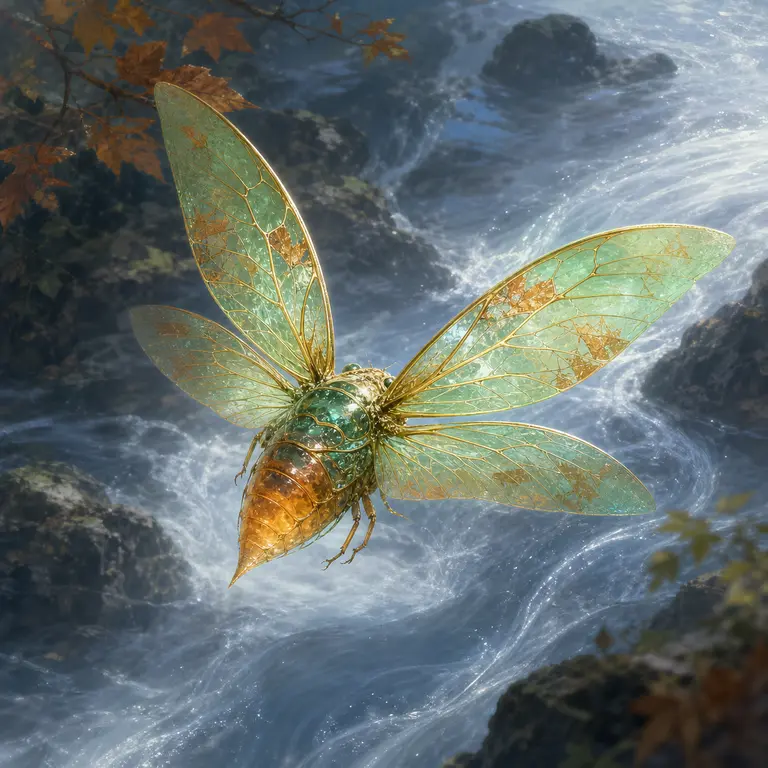
Reverend Insanity opens when Fang Yuan, a demonic Gu Master surrounded after five centuries of struggle, activates the Spring Autumn Cicada and awakens as his fifteen-year-old self in Gu Yue Village. He retains experience but not the power he once accumulated. His return places him shortly before the clan's awakening ceremony, where aptitude, family expectations, and access to Gu determine a young cultivator's future. Fang Yuan uses knowledge of coming events to seek resources and opportunities while concealing both his rebirth and the damaged Immortal Gu recovering inside his aperture.
The story follows the consequences of that pursuit as its scale expands from Qing Mao Mountain to the Southern Border, Central Continent, the Northern Plains, Eastern Sea, Western Desert, and the two heavens. Fang Yuan repeatedly enters organizations under assumed identities, bargains with allies whose interests only partly match his own, and contests inheritances and fixed historical outcomes. His conflict is not organized around becoming accepted by the cultivation world: he treats reputation, faction, kinship, and even temporary cooperation as conditions to understand and exploit while pursuing eternal life.
This approach also makes knowledge a form of power with limits. Fang Yuan's memories offer early advantages, yet changing events makes the future increasingly unfamiliar, and other long-lived schemers possess plans that began far before his rebirth. The struggle over fate, revival, and venerable inheritances therefore becomes a contest among competing wills rather than a simple march through stronger opponents.
World and cultivation
The world's five regions have distinct cultures and political structures, while two heavens stretch above them. Mortal clans and sects control local resources; Gu Immortal forces hold blessed lands, grotto-heavens, Immortal Gu, and long inheritances. Central Continent is dominated by ten ancient sects under Heavenly Court, the Northern Plains by bloodlines and tribes linked to Longevity Heaven, and the other regions by their own clans, sects, lone cultivators, and demonic figures. Regional walls initially restrict travel according to a cultivator's origin, but the geography and balance of power change as the great era approaches.
Gu are living creatures that embody effects as varied as strength, healing, movement, time, wisdom, luck, and emotion. A Gu Master opens an aperture, refines Gu with their own will, feeds them, and spends primeval essence to activate them. Mortal cultivation advances from rank one through rank five; the early ranks divide into initial, middle, upper, and peak stages. Aptitude controls the size and recovery of the primeval sea, so talent affects speed and endurance without replacing resources, technique, or judgment.
Immortal ascension breaks the mortal aperture into an immortal aperture and begins ranks six through nine. Gu Immortals use immortal essence and cultivate dao marks associated with paths such as refinement, strength, wisdom, time, space, soul, luck, and heaven. Dao marks amplify matching methods while often interfering with other paths, making specialization powerful and multi-path cultivation difficult. Calamities and tribulations periodically test the immortal aperture, but they also add dao marks when survived; managing time, resources, and danger inside the aperture is therefore inseparable from increasing combat strength.
Formal rank is only one measure of capability. Path attainment reflects comprehension and can allow deduction, adaptation, or use of natural dao marks, while soul foundation, exceptional physiques, inheritances, formations, killer moves, and Immortal Gu Houses create other advantages and constraints. Gu must still be fed, killer moves can fail when a component is disrupted, and powerful treasures can expose their owner to pursuit. The same scarcity that drives individual advancement also shapes the setting's wars: factions compete not merely for territory, but for inheritances, immortal materials, human talent, and control over the conditions under which cultivation is possible.