I’m an Infinite Regressor, But I’ve Got Stories to Tell
An immortal regressor recounts the strange victories, failures, friendships, and anomalies accumulated across hundreds of attempts to guide an apocalyptic world toward a future worth remembering.
- Author
- Sinnoa
- Status
- Completed
About the novel
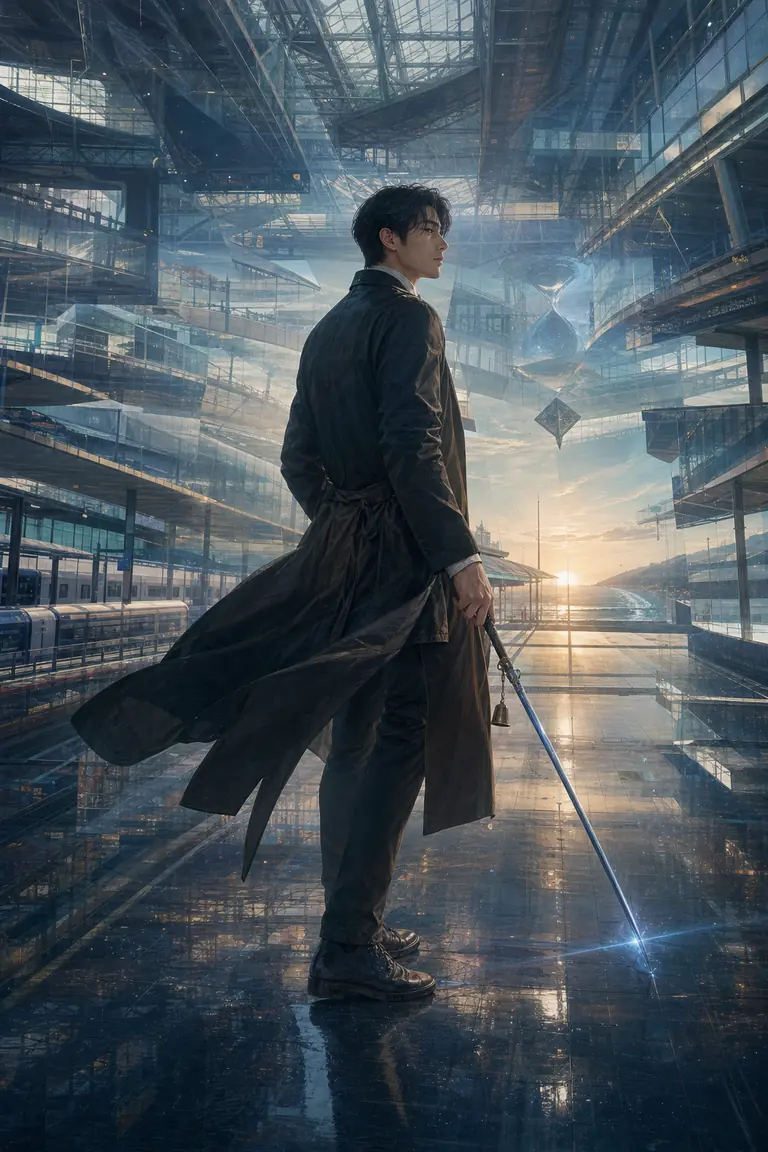
I’m an Infinite Regressor, But I’ve Got Stories to Tell follows the Undertaker, a man whose death repeatedly returns the world to the Busan Station Tutorial. Complete memory makes each failure usable, but it also leaves him carrying every lost friendship and ruined strategy. Rather than narrating one clean ascent, he tells episodes from many cycles: first meetings that never happen the same way twice, expeditions against impossible rules, and the small routines that keep a person recognizable after centuries of repetition.
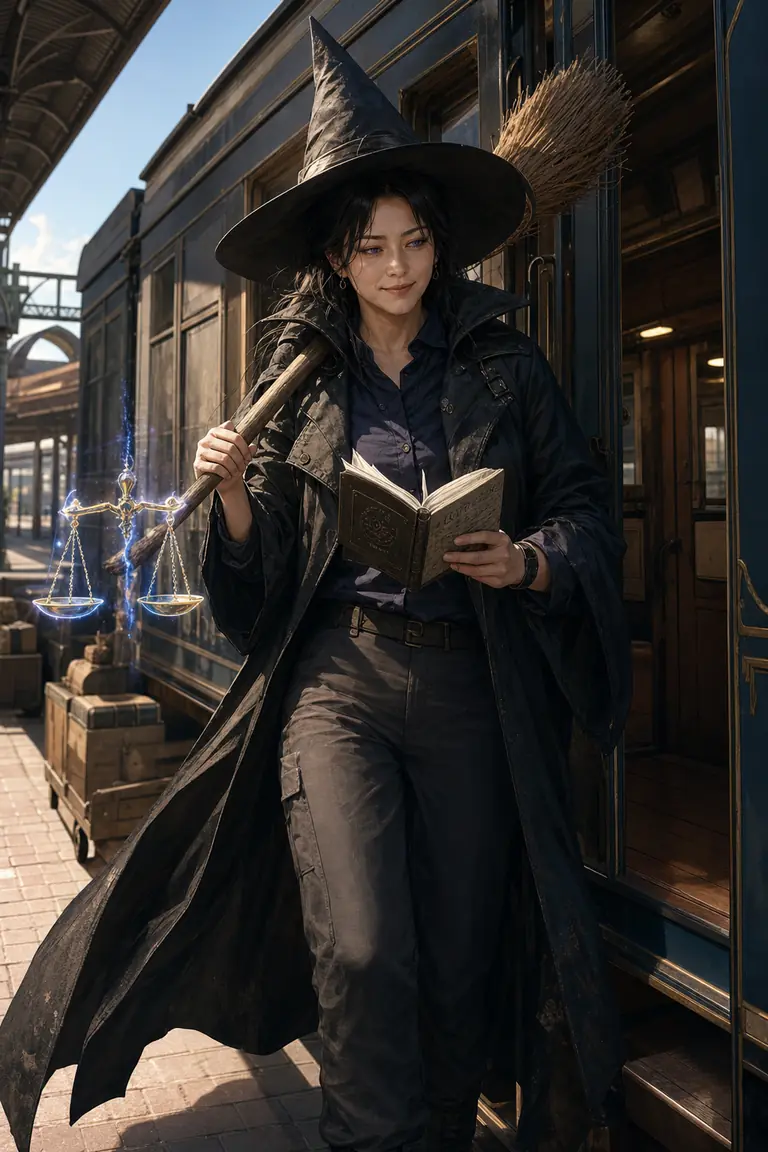
The apocalypse is driven by Voids and Anomalies that impose concepts, stories, games, dreams, and contaminated natural laws on reality. The Undertaker’s advantage is therefore not raw strength alone. He builds the Regression Alliance from observers, healers, craftspeople, administrators, witches, necromancers, and former enemies, turning fragile individual powers into roads, communications, research, and coordinated campaigns. Their deeper conflict is preserving human choice when victory repeatedly encourages the Undertaker to reduce companions to optimized pieces.
The anthology structure makes memory part of the setting rather than a simple framing device. Later accounts can reveal that an apparent monster carried a human history, that a useful system was feeding an Outer God, or that an intimate relationship began before the apocalypse. These corrections do not erase earlier stories; they show how different cycles preserve partial truths about the same people.
World and the Void
The Busan Station Tutorial marks the recurring threshold into a collapsed world. Awakeners manifest individualized abilities shaped by their lives, while surviving institutions reorganize around guilds and practical networks. SG Net connects dead devices, the National Road Management Corps keeps settlements linked, the Library Society records Anomalies, and the Saintess’s constellation personas provide surveillance and coordination. Their combined infrastructure matters because many threats cannot be defeated by a single compatible ability or a stronger blow.
Aura can reinforce bodies and weapons, form barriers, and support extraordinary martial techniques, but it is trainable rather than a formal sequence of ranks. Magic, necromancy, individualized Awakening, Miko bonds, Corruption, and transformation into anomalous states develop along separate branches with distinct costs. An ability may strengthen through practice, widen through reinterpretation, or become dangerous when a person’s identity is absorbed into its rules.
The Library Society’s anomaly threat scale is the setting’s clearest ordered classification. Village-class threats begin at Level 1, followed by Polis-, Continent-, Ocean-, and Outer God-class at Level 5. The scale measures destructive and reality-altering scope rather than a universal combat ranking: conceptual compatibility, sealing conditions, and an anomaly’s governing story can matter more than direct force. Outer Gods are especially dangerous because each attempts to define the world through one totalizing domain, such as endless play, frozen time, simulation, night, or an oceanic system fed by Aura.